
Starting a skincare routine doesn't mean you need a 10-step process or a vanity full of expensive luxury potions. In the morning, your skin has one primary goal: protection. While your nighttime routine focuses on repair, your daytime routine acts as a shield against environmental damage, pollution, and harsh UV rays. Many beginners feel overwhelmed by the sheer volume of beauty marketing, but dermatologists agree that a simple, consistent regimen is vastly superior to a complicated, inconsistent one.
When you sleep, your skin goes through a natural regenerative cycle, repairing cellular damage and producing natural oils. As a result, your morning canvas requires a specific set of steps to transition from a state of rest to a state of active defense. By establishing a solid morning ritual, you are not just improving your immediate appearance; you are actively investing in the long-term health, elasticity, and youthfulness of your skin matrix. If you are completely new to skincare, this streamlined routine is your perfect foundation. It is simple, highly effective, and takes less than five minutes of your time.
Understanding Your Skin Type Before You Begin
Before diving into the specific steps of a morning routine, it is absolutely vital to understand your unique skin type. Applying the wrong product configuration can trigger adverse reactions, leading to unwanted breakouts, severe flaking, or excessive oil production. Your skin type is primarily determined by genetics, though it can fluctuate based on climate, hormones, age, and stress levels. Take a moment to analyze how your face feels a few hours after waking up to determine where you fit into the skin health spectrum.
Normal Skin: This skin type is beautifully balanced, experiencing neither extreme dryness nor excessive oiliness. It rarely suffers from severe sensitivity, visible pores, or persistent blemishes. If your skin feels comfortable, smooth, and resilient throughout the day, you likely have a normal skin profile that simply requires basic maintenance and daily protection.
Dry Skin: If your face frequently feels tight, rough, or displays visible flaking, you possess a dry skin type. This occurs when your skin matrix lacks sufficient lipid production, leading to a compromised moisture barrier. Dry skin is highly susceptible to premature fine lines, dullness, and irritation, meaning your routine must focus heavily on deep hydration and moisture retention mechanisms.
Oily Skin: Oily skin is characterized by an overproduction of sebum from the sebaceous glands, often resulting in a persistent shiny appearance, enlarged pores, and a higher vulnerability to blackheads and acne breakouts. A common misconception is that oily skin does not require hydration; in reality, skipping hydration can cause the skin to produce even more oil to compensate for dehydration.
Combination Skin: This is one of the most common profiles, featuring an oily T-zone (the forehead, nose, and chin) paired with dry or normal skin on the cheeks. Managing combination skin requires a strategic approach that balances oil control in hyperactive zones while delivering rich nourishment to dry patches without causing clogging.
Step 1: Cleanse (The Foundation of Daytime Defense)
The In-Depth Explanation: Overnight, your skin is far from stagnant. While you sleep, your skin continuously expels metabolic waste, sheds microscopic dead cells, and secretes sebum. Additionally, your face comes into direct contact with dust, allergens, and microscopic residue residing on your pillowcase, alongside any heavy creams or treatments you applied the previous night. A deliberate morning cleanse acts as a vital reset button for your face.
Cleansing removes this accumulation of impurities to prevent the formation of micro-comedones (the precursors to acne). More importantly, it optimizes the surface tension of your skin, creating a completely receptive pathway for subsequent topical treatments. Skipping this step means applying fresh products over a layer of debris, which heavily compromises their chemical efficacy and risks trapping bacteria inside your pores.
Comprehensive Pros
|
Potential Cons
|
Application Technique: Always use lukewarm water, as hot water strips natural oils while cold water fails to dissolve sebum efficiently. Dispense a dime-sized amount of cleanser into clean hands, massage gently onto damp skin using circular upward motions for 30 to 60 seconds, and rinse thoroughly. Pat dry with a clean, dedicated face towel rather than rubbing aggressively.
Recommended Products:
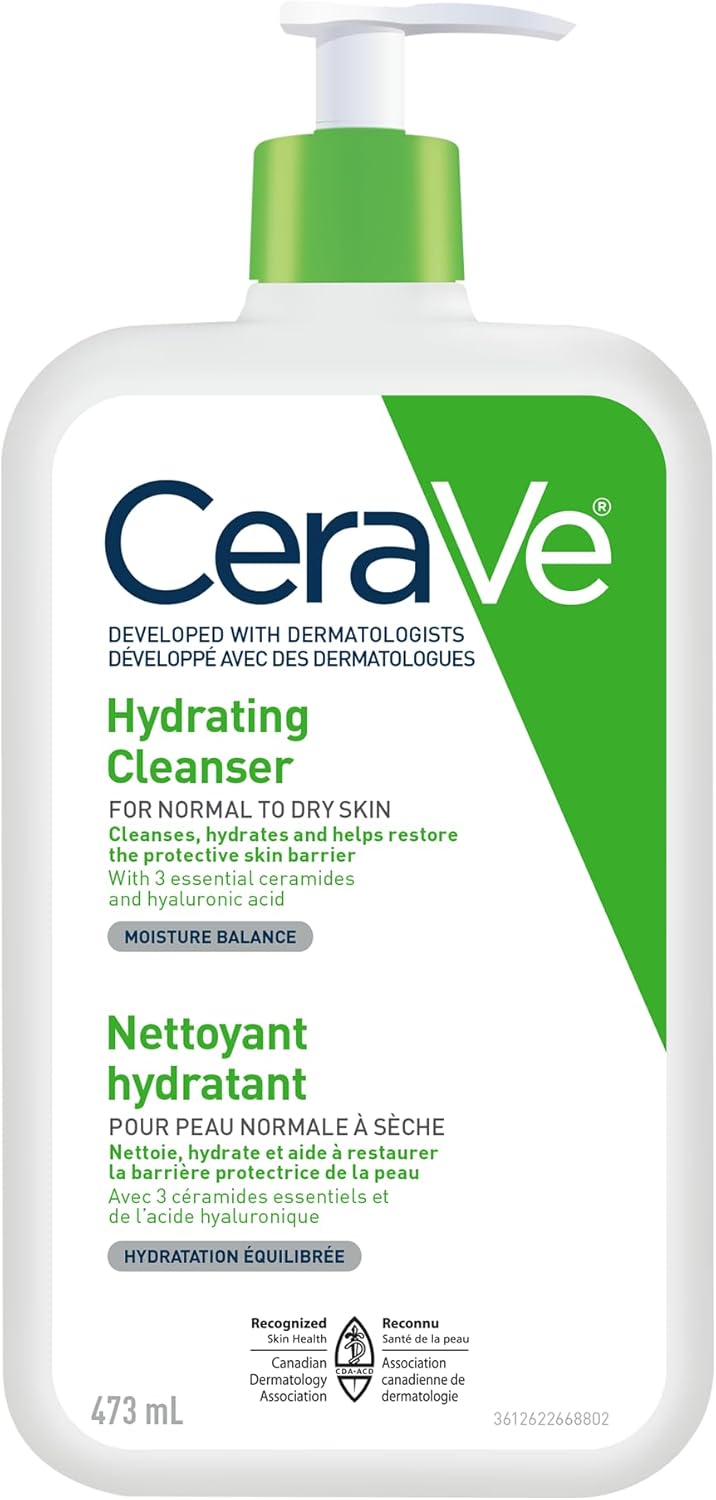
• For Dry, Sensitive, or Normal Skin: CeraVe Hydrating Facial Cleanser. This non-foaming formula contains three essential ceramides and hyaluronic acid to cleanse without disrupting the skin barrier.
• For Oily, Combination, or Acne-Prone Skin: Cetaphil Daily Facial Cleanser. A low-foaming, dermatologist-tested gel that deep-cleanses pores and removes excess oil without over-drying the skin matrix.
Step 2: Moisturize (The Hydration Lock & Barrier Support)
The In-Depth Explanation: Regardless of your skin type, a daily moisturizer is non-negotiable. The outermost layer of your skin, known as the stratum corneum, functions as a brick-and-mortar shield against the external world. The cells are the bricks, and natural lipids represent the mortar. Environmental exposure, air conditioning, heating, and wind constantly deplete this lipid mortar, allowing vital moisture to evaporate through a process called Transepidermal Water Loss (TEWL).
A properly formulated daytime moisturizer delivers a precise blend of humectants (which draw water into the skin), emollients (which smooth and soften the texture), and occlusives (which form a protective layer to trap water). When you provide this external support, you prevent the skin from entering an inflammatory state. For oily skin types, regular moisturizing signals the sebaceous glands that the skin is sufficiently hydrated, effectively slowing down excessive sebum production over time.
Comprehensive Pros
|
Potential Cons
|
Application Technique: Apply your moisturizer while the skin is still slightly damp from your cleansing step. This traps the superficial surface moisture directly into your skin cells. Dot the product onto your forehead, cheeks, nose, and chin, then smooth it outward and upward. Never forget to extend your moisturizer down to your neck and chest area, as these areas age rapidly.
Recommended Products:
• For Normal, Dry, or Flaky Skin: La Roche-Posay Toleriane Double Repair Face Moisturizer. Formulated with a high concentration of prebiotic thermal water, ceramide-3, and niacinamide to restore healthy skin function.

• For Oily, Combination, or Acne-Prone Skin: Neutrogena Hydro Boost Water Gel. An ultra-lightweight, oil-free gel formula packed with hyaluronic acid that instantly quenches skin without adding grease.

Step 3: Sunscreen (The Ultimate Anti-Aging Weapon)
The In-Depth Explanation: If you only execute one step every single morning, it must be the application of a broad-spectrum sunscreen. Scientific studies consistently demonstrate that up to 80 percent of visible facial aging—including deep wrinkles, structural sagging, leathery texture, and hyperpigmentation dark spots—is the direct result of daily ultraviolet (UV) radiation. Even worse, cumulative sun exposure damages cellular DNA, significantly raising the risk of skin cancers.
Solar radiation comes in two primary forms that affect your skin: UVA and UVB rays. A helpful memory aid is that UVA rays cause "Aging" by penetrating deep into the dermis to destroy collagen and elastin networks, while UVB rays cause "Burning" by targeting the superficial layers. These rays pass easily through glass windows and cloud cover, meaning sunscreen is absolutely mandatory even when spending the day indoors or navigating overcast winter weather.
Comprehensive Pros
|
Potential Cons
|
Application Technique: To achieve the actual sun protection factor listed on the bottle, you must apply an adequate amount of product. Use the "two-finger rule": squeeze two consistent lines of sunscreen directly onto your index and middle fingers. This is the exact volume required to fully shield your face and neck. Apply it uniformly as the final layer of your routine, and allow it to set for 15 minutes before applying makeup or stepping outside.
Recommended Products:
• For Sensitive, Acne-Prone, or Rosacea Skin: DRMTLGY Anti-Aging Clear Face Sunscreen SPF 45. An exceptional oil-free zinc oxide formula enriched with niacinamide and hyaluronic acid to intensely calm facial redness, promote a clear skin matrix, and prevent clogged pores.

• For Normal, Dry, or Dull Skin: Beauty of Joseon Relief Sun SPF 50. A highly sought-after organic chemical sunscreen enriched with 30% rice extract and grain-fermented vitamins that leaves a beautiful, weightless, dewy finish.
![[2 Pack] Beauty of J Relief Sun Sun screen (SPF50+ PA++++), Korean Sun screen Cream](https://m.media-amazon.com/images/I/31dn7HEMRVL._AC_.jpg)
Managing Your Expectations: The Timeline of Skin Health
In a world dominated by instant digital gratification and heavily filtered social media trends, it is easy to expect immediate transformations. However, true biological change requires patience. Your skin operates on a natural cellular turnover cycle that averages roughly 28 days in healthy adults, and this process slows down further as we age. This means any new topical product requires a minimum of one full month of daily use before you can accurately judge its efficacy.
During the first week of your new beginner routine, you will likely notice a rapid improvement in hydration and overall surface smoothness. Your skin will feel less tight and display a healthier bounce due to the immediate barrier support from your moisturizer. However, deeper corrections—such as balancing oil production, minimizing the appearance of pores, or fading minor discolorations—can take anywhere from 8 to 12 weeks of unbroken consistency. Skincare is a marathon, not a sprint; dedication to your daily steps will always yield better long-term rewards than chasing aggressive, harsh fast fixes.
The Golden Rule: Consistency Beats Complexity Every Time
Building beautiful skin does not require a highly complex, overwhelming shelf of chemical products. By mastering these three foundational pillars—cleansing, moisturizing, and protecting—you are providing your skin matrix with everything it fundamentally needs to thrive during the day. Protect your canvas, stay patient, and let consistency do the heavy lifting for your natural glow!
Frequently Asked Questions
Q: Can I skip my morning facial cleanse if I washed my face thoroughly right before going to bed?
A: It is not recommended. While you sleep, your skin actively sheds dead skin cells, secretes sebum, and expels metabolic waste. Your face also collects dust and pillowcase residue overnight. A gentle morning cleanse resets your skin canvas and allows your daytime moisturizer and sunscreen to absorb effectively.
Q: Why does oily or combination skin still require a daily moisturizer?
A: When oily skin is stripped of moisture, its sebaceous glands go into overdrive to compensate for the dehydration, causing even more oil production. Applying a lightweight, non-comedogenic water gel hydrates the cells and signals the skin to balance its natural oil profile over time.
Q: Do I really need to wear sunscreen on cloudy days or when I am staying indoors all day?
A: Yes, absolutely. UVA rays (which are responsible for premature aging and deep cellular damage) easily penetrate dense cloud covers and standard glass windows. Daily broad-spectrum SPF protection is a crucial, non-negotiable step for long-term skin health and effective anti-aging maintenance.
Q: How long should I wait after completing my skincare routine before applying makeup?
A: You should wait roughly 10 to 15 minutes. This allows your moisturizer and broad-spectrum sunscreen to completely set and form their protective barriers over the skin barrier, preventing your foundation from pilling, shifting, or breaking down early in the day.